Tennis

Tennis

Australian Open 2026: January 21 Brings Key Matches as the Tournament Heats Up

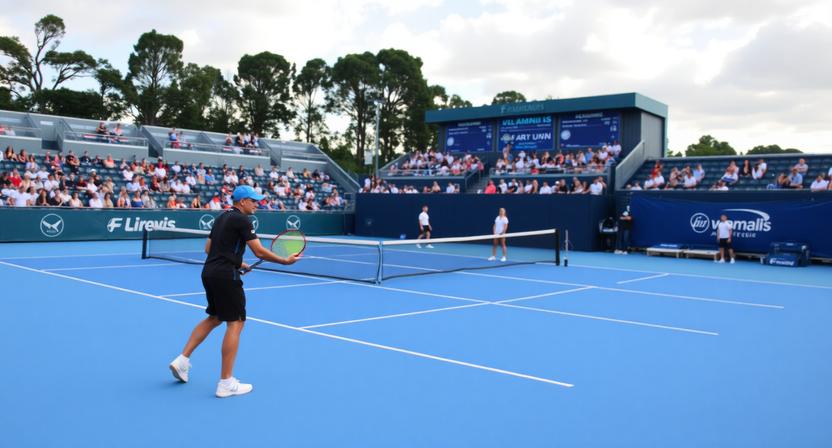
Date: Wednesday, January 21, 2026 | Venue: Melbourne Park, Melbourne The Australian Open reached an important point on January 21, 2026, as the competition moved closer to its final stages at Melbourne Park. With the field narrowing and pressure rising, the matches played on this day played a major role in shaping how the rest of the tournament would unfold. As the season’s first Grand Slam entered its second week, players knew there was little room for mistakes. Wins on January 21 brought players closer to the quarterfinals, while defeats marked the end of months of preparation and hard work. What January 21 Meant for the Tournament By this stage, early-round surprises were largely over. Most remaining players were either top seeds or in strong form. Matches on January 21 were about consistency, fitness, and handling pressure rather than just talent. For many players, this was the point where the tournament truly began. Advancing meant not only surviving tough opponents but also managing the physical demands of playing in Melbourne’s summer conditions. Action Across Melbourne Park Fans were treated to a full day of high-quality tennis across Melbourne Park’s main courts: Day sessions tested endurance under the sun, while night matches brought added drama under the lights, one of the Australian Open’s most popular features. Players Under the Spotlight January 21 saw leading players aiming to avoid late-tournament upsets while continuing their push toward the title. Matches were often longer and more physical, especially in the men’s draw, where five-set contests demanded mental strength and stamina. Several players showed calmness in key moments, closing out tight sets and handling pressure points well. Others struggled with unforced errors or fatigue, showing just how demanding the tournament becomes at this stage. Crowd Energy and Atmosphere The atmosphere around Melbourne Park was lively throughout the day. Fans from around the world filled the stands, while Australian supporters got behind local players still competing in the draws. Crowd reactions played a noticeable role, lifting players during close moments and adding extra tension to already tight matches. Evening sessions, in particular, delivered an electric atmosphere that added to the importance of the day. Why January 21 Was So Important More than just another matchday, January 21, 2026, helped define the direction of the Australian Open. The results determined who remained in contention, who moved one step closer to the trophy, and which storylines would dominate the rest of the tournament. As the competition moved toward the quarterfinals and beyond, performances on this day set the tone for finals week—making January 21 a key turning point at Melbourne Park.

Tennis

Australian Open 2026: Quarterfinal Action Defines January 20–21

The Australian Open 2026 entered a crucial stage on Tuesday and Wednesday, January 20–21, as the competition narrowed to the final eight players in singles and the last remaining teams in doubles. These two days marked the official quarterfinal phase for men’s and women’s singles, along with the doubles semifinals, setting the stage for the final weekend at Melbourne Park. By this point in the tournament, all remaining players had already proven their form and endurance through multiple rounds. The early upsets, five-set marathons, and tactical battles of the first week gave way to a more measured, high-pressure style of tennis, where every point carried added significance. January 20, 2026 (Tuesday): Singles Quarterfinals Begin The quarterfinal schedule opened on January 20 with a selection of Men’s Singles Quarterfinal and Women’s Singles Quarterfinal matches. Only eight players remained in each singles draw, representing a mix of top seeds and lower-ranked players who had produced strong runs during the opening rounds. In the men’s draw, the quarterfinalists showcased contrasting styles — powerful baseline hitters, strong servers, and players relying on movement and consistency. Matches at this stage often featured longer rallies and fewer unforced errors, as players focused on minimizing risk while waiting for openings. The women’s singles quarterfinals reflected the growing depth of the field. Players reaching this round had demonstrated solid serving performances, effective return games, and mental toughness across earlier matches. Several quarterfinal encounters were shaped by momentum swings, with players forced to adjust tactics mid-match to remain competitive. January 21, 2026 (Wednesday): Quarterfinals Conclude and Doubles Semifinals Played The remaining singles quarterfinal matches were completed on Wednesday, January 21, confirming the semifinalists in both men’s and women’s competitions. With fewer matches on the daily schedule, the atmosphere around the main courts intensified, and crowd engagement grew noticeably. Wednesday also featured the Doubles Semifinals, a key milestone for teams in the men’s, women’s, and mixed doubles events. Only four teams in each category advanced to this stage, highlighting consistency and coordination developed throughout the tournament. Doubles matches during the semifinals emphasized sharp net play, accurate serving, and clear communication between partners. Many teams relied on planned formations and quick exchanges at the net, where reaction time often decided crucial points. Significance of the January 20–21 Phase The quarterfinal and doubles semifinal rounds played across these two days effectively defined the final narrative of the Australian Open 2026. Players who advanced did so after navigating demanding schedules, varying court conditions, and increasing pressure with every round. As the tournament moved beyond January 21, attention shifted fully toward the semifinals and finals, with only the most composed and physically prepared competitors remaining in contention for the season’s first Grand Slam title. Reference framework:Australian Open official scheduling format, standard Grand Slam progression, and ATP/WTA tournament structures.


Tennis

United Cup Action Intensifies as Teams Battle for Momentum

Sunday, 11 January 2026 — United Cup 2026 The United Cup delivered another decisive day of mixed-team tennis on January 11, 2026, as national teams continued their campaigns in the group-stage phase of the international tournament. With progression toward the knockout rounds at stake, the day’s ties carried added importance, combining men’s and women’s singles with mixed doubles to test depth, adaptability, and team cohesion across nations. Group Battles Shape Qualification Scenarios January 11 marked a pivotal point in the United Cup schedule, with teams entering the latter stages of group play. Each tie followed the tournament’s mixed-team format, where results across multiple matches contribute to the overall outcome, placing equal emphasis on men’s and women’s performances. Several teams approached the day knowing that a win would significantly strengthen their chances of advancing, while others faced pressure to recover from earlier setbacks. Matches unfolded with noticeable urgency, as players balanced individual responsibility with the broader objective of securing points for their country. Tournament officials noted that ties at this stage often define the competition’s direction. “Once you reach this point, every set matters,” one official said, pointing to the narrow margins that frequently separate group winners from those eliminated. Singles Matches Set the Foundation Men’s and women’s singles encounters formed the backbone of January 11’s action. Players focused on consistency and controlled aggression, aware that dropped matches place immediate strain on the team’s prospects. Several singles contests were decided by fine margins, with momentum swinging sharply between sets as players adjusted tactics under pressure. From a player perspective, the team-based environment added a distinct dimension. One competitor remarked post-match that representing a national side in a mixed format “changes how you approach big points,” emphasizing the shared responsibility that distinguishes the United Cup from traditional tour events. Mixed Doubles Add Strategic Complexity As with previous days, mixed doubles played a crucial role in deciding ties or breaking deadlocks. Partnerships were tested on communication and adaptability, particularly where pairings had limited competitive history together. Quick exchanges at the net and coordinated serving strategies proved decisive in several closely fought matches. Coaches highlighted mixed doubles as a potential turning point in the competition. “It’s the match that can flip an entire tie,” one team captain noted, underscoring the tactical importance of balance and chemistry. Context Within the United Cup Format The United Cup occupies a unique position on the tennis calendar, blending ATP and WTA competition into a single team-based event at the start of the season. Results contribute to individual tour rankings while also determining national progression, creating dual incentives for players. Historically, strong performances around January 10–11 often set the tone for teams advancing deep into the tournament. Consistency across both tours, rather than reliance on a single star player, has proven essential in navigating the group phase successfully. The 2026 edition continued that trend, with balanced squads demonstrating a clear advantage as the competition intensified. Looking Ahead to the Knockout Stage As play concluded on January 11, qualification scenarios across groups became clearer, though several remained finely balanced heading into the final round of ties. Teams emerging with momentum will aim to carry confidence into the knockout stage, where the pressure and visibility increase significantly. For players, the focus now shifts toward recovery and preparation, as the demands of consecutive high-stakes matches accumulate early in the season. The January 11 action reaffirmed the United Cup’s role as both a competitive proving ground and a springboard into the broader 2026 tennis calendar, with national pride and ranking implications tightly intertwined.

Tennis

Tennis Today: A Positive Chapter for a Global Sport

Tennis is enjoying a bright and inspiring moment as the sport continues to evolve on and off the court.Recent tournaments across the world have highlighted not only thrilling competition, but also sportsmanship, innovation, and a renewed connection with fans.From packed stadiums to millions watching online, tennis is once again proving why it remains one of the most loved global sports. One of the most encouraging developments in current tennis is the rise of a new generation of players who combine skill, discipline, and humility.Young athletes are stepping onto the biggest stages with confidence, challenging established champions and bringing fresh energy to every match.Their fearless style of play has made tournaments more exciting and unpredictable, keeping audiences fully engaged from the first serve to match point. At the same time, experienced players continue to inspire by demonstrating resilience and professionalism.Comebacks from injury, long five-set battles, and emotional victories remind fans that tennis is as much a mental game as it is a physical one.These moments showcase dedication, hard work, and the belief that perseverance can overcome even the toughest challenges. Off the court, tennis organizations are making meaningful progress.Both the ATP and the WTA have placed greater emphasis on player welfare, mental health awareness, and fair scheduling.There is also growing attention on sustainability, with tournaments adopting eco-friendly practices such as reducing plastic use and promoting greener travel options. Another positive trend is the sport’s expanding global reach.Tennis is gaining popularity in regions that were once underrepresented, inspiring young players to pick up a racket and dream big.Grassroots programs and academies are helping nurture talent, ensuring that the future of tennis will be diverse, competitive, and inclusive. Major events like the Australian Open and other international tournaments have also embraced technology to enhance the fan experience.Advanced analytics, faster reviews, and high-quality broadcasts allow viewers to feel closer to the action than ever before, whether they are in the stadium or watching from home. Overall, the current tennis landscape is filled with optimism.The blend of emerging stars, respected champions, responsible leadership, and passionate fans is creating a powerful momentum.As the season continues, tennis stands as a shining example of how sport can unite people, celebrate excellence, and inspire positivity around the world. Technology and innovation have also enhanced the modern tennis experience.Improved broadcast coverage, advanced analytics, and fair officiating systems have made the sport more transparent and engaging for fans.Viewers can now better understand player strategies, physical demands, and match dynamics, deepening appreciation for the skill and endurance required at the highest level.

Scroll to Top